
Rubiaceae
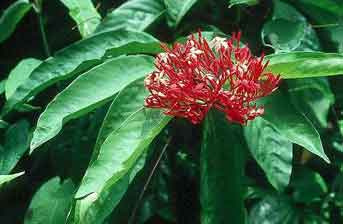
Mark Merlin

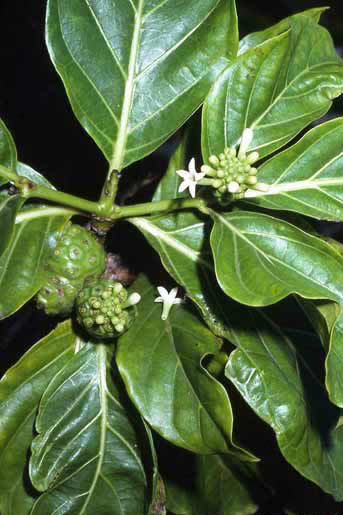
Trees, shrubs, herbs or climbers; leaves simple, opposite, entire or toothed; stipules interpetiolar, commonly conspicuous, foliaceous or variously formed, entire bifid, laciniate, etc., rarely reduced to a linear ridge; flowers in inflorescences or heads, or solitary, regular, usually 4-5-merous, perfect or unisexual or dioecious, or polygamc-dioecious, always bracteate, sometimes also bracteolate; calyx usually 4-5 (rarely 2-3- or 6-9-) lobed, basally at least connate to the inferior ovary; corolla tubular, 3-9-lobed; stamens (or staminodes) usually as many as corolla-lobes and alternate with them, nearly always free; ovary 1-12-celled, commonly 2-celled; cells 1-many-ovulate; stigma simple or lobed, on simple style; fruit a capsule, berry, or drupe, free or fused to each other; seeds sometimes winged; usually endosper- mous. A very large predominantly Tropical family of nearly 500 genera and nearly 6000 species, around the world, a few in Temperate cold regions. Important for coffee, quinine, tannins, and other products.
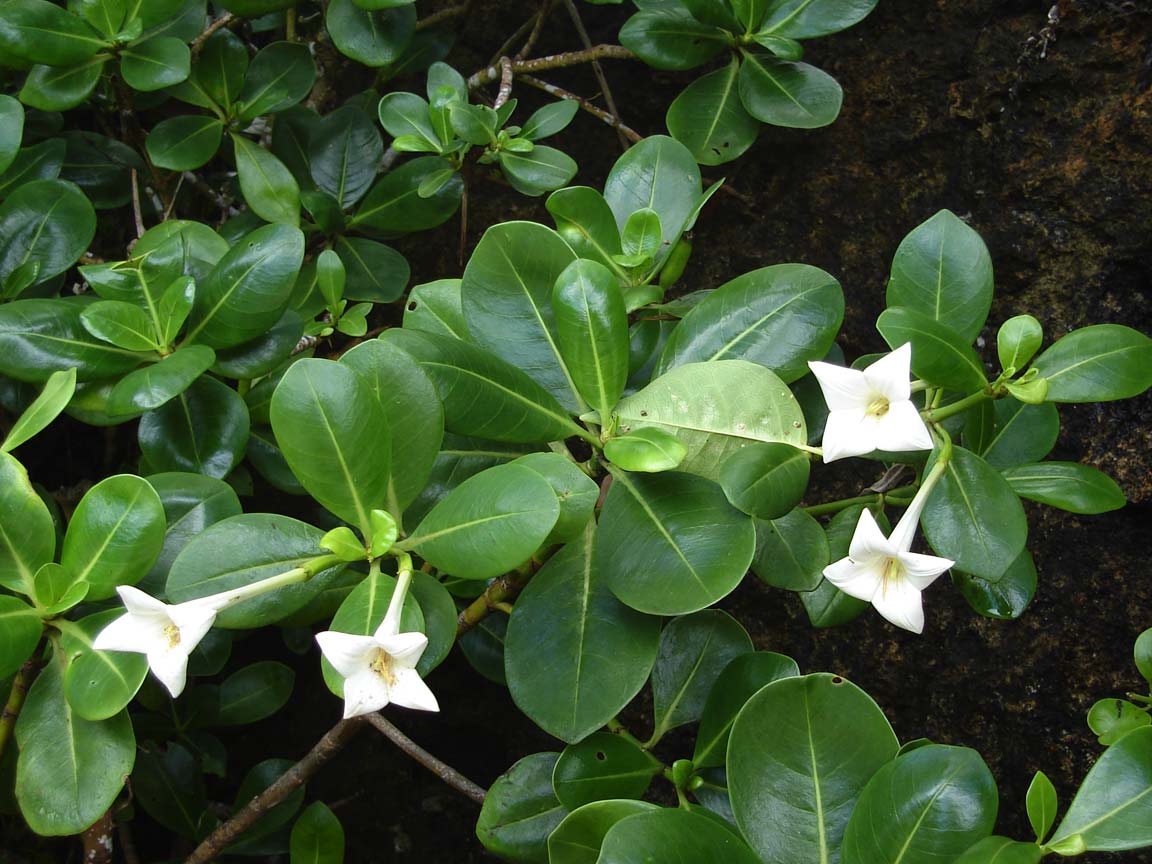
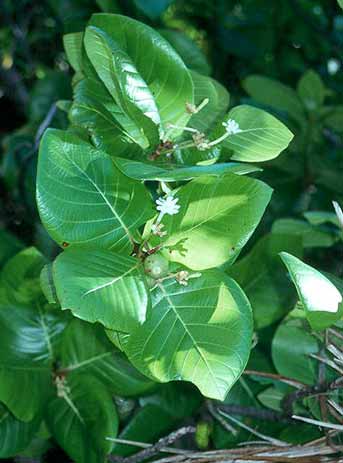
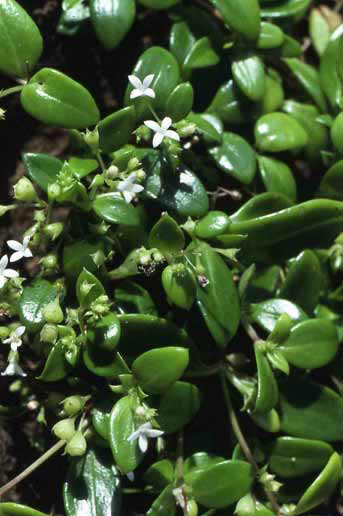
Images
not available
not available
Images
not available
not available