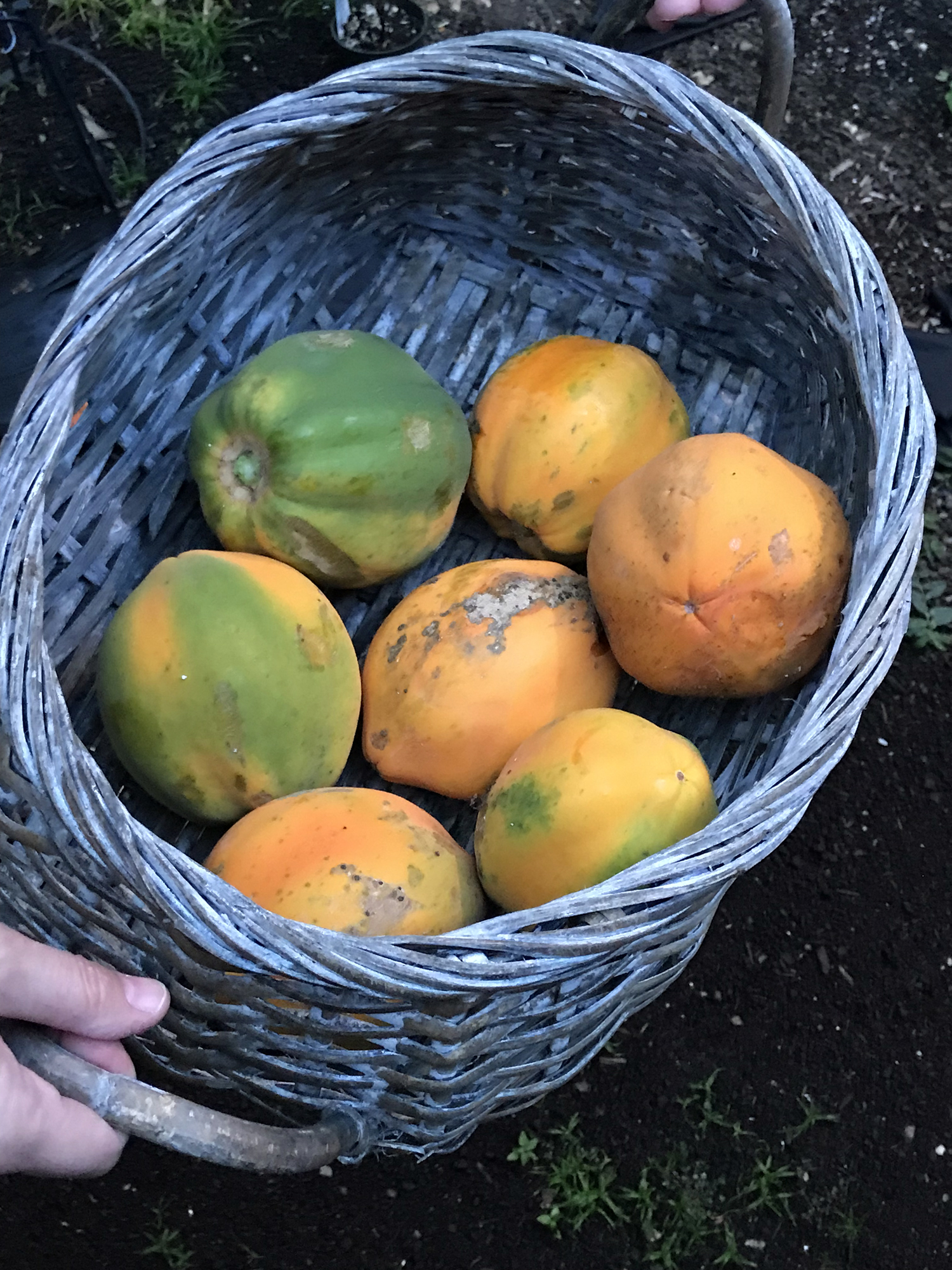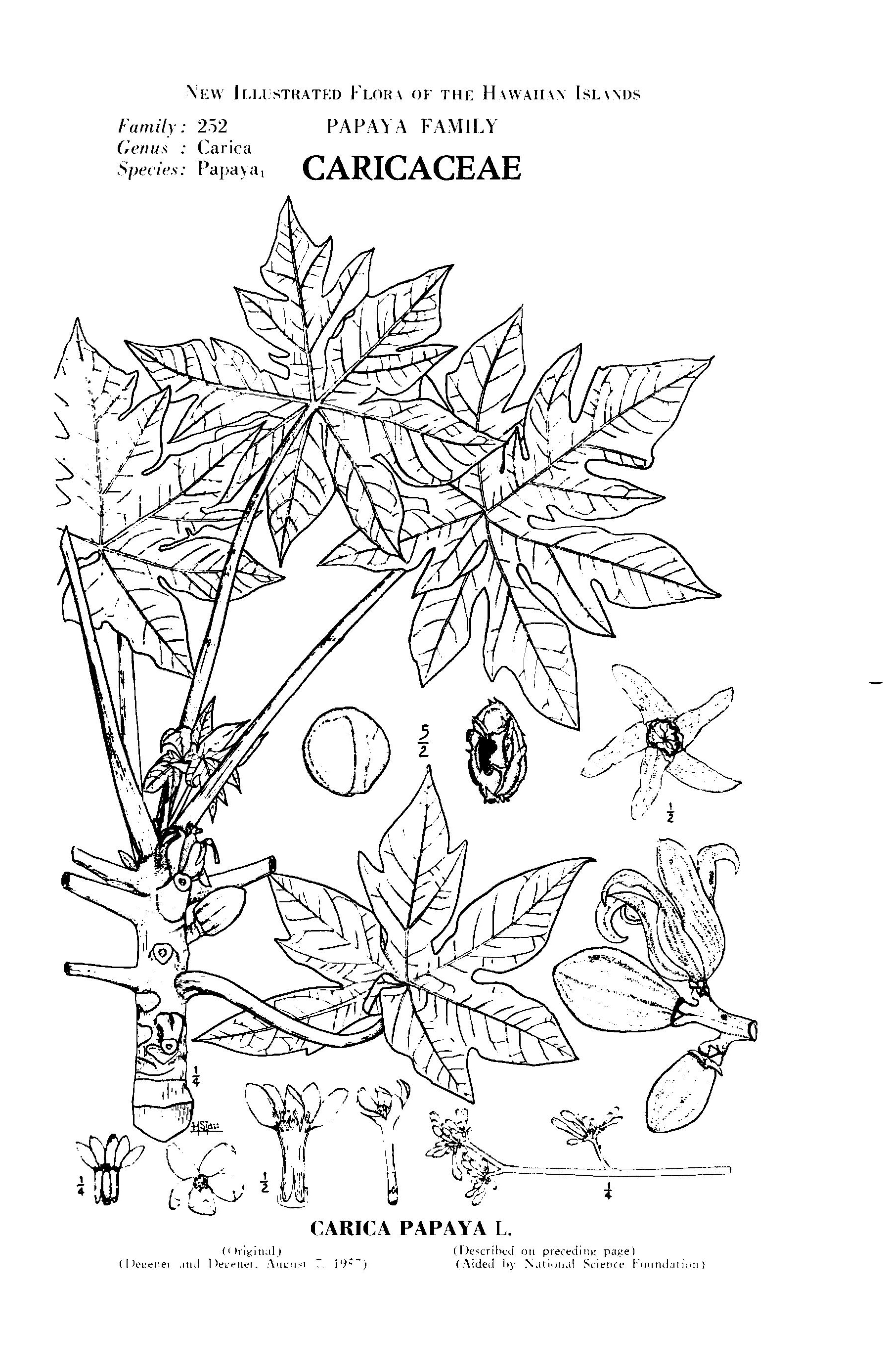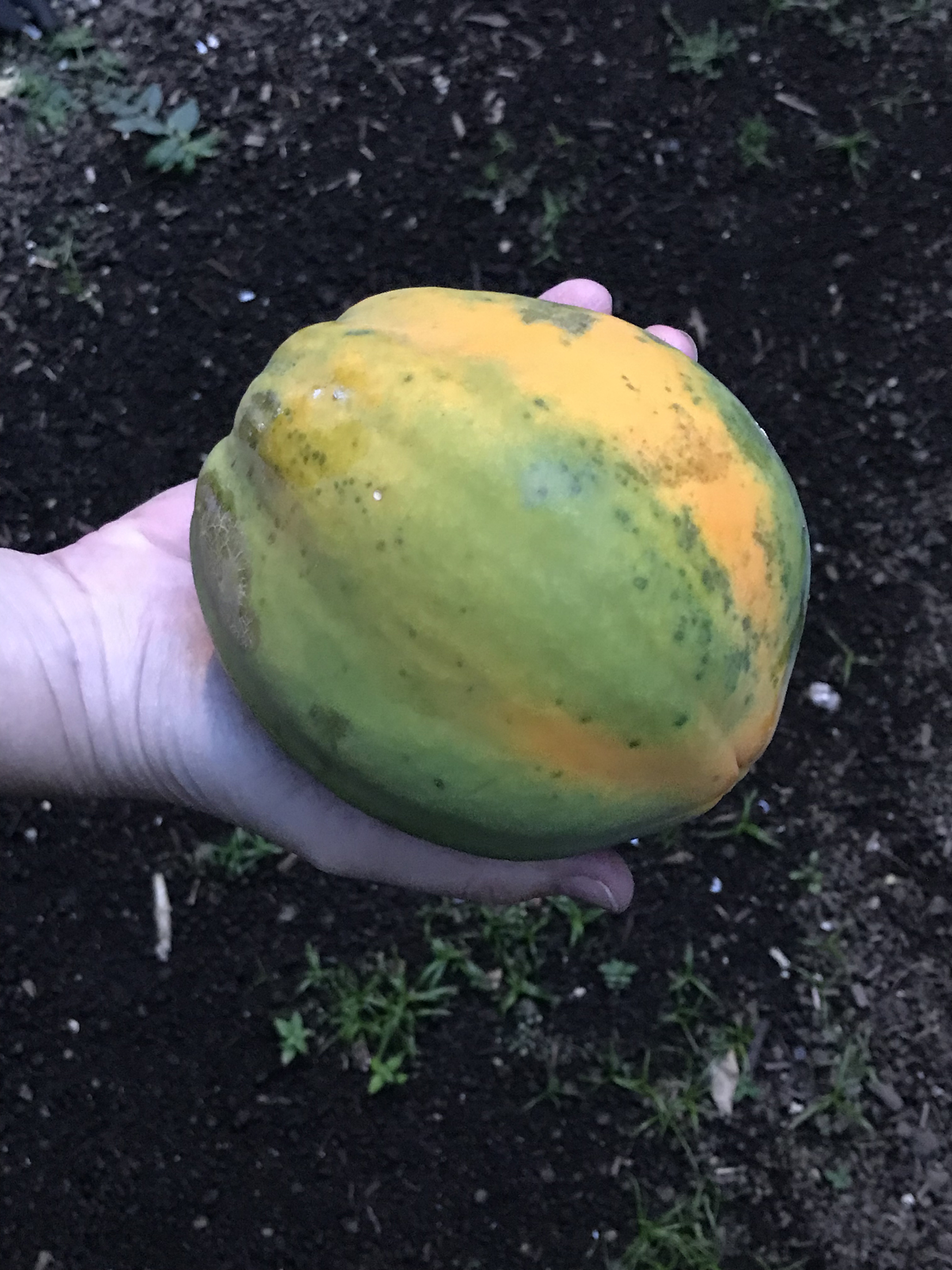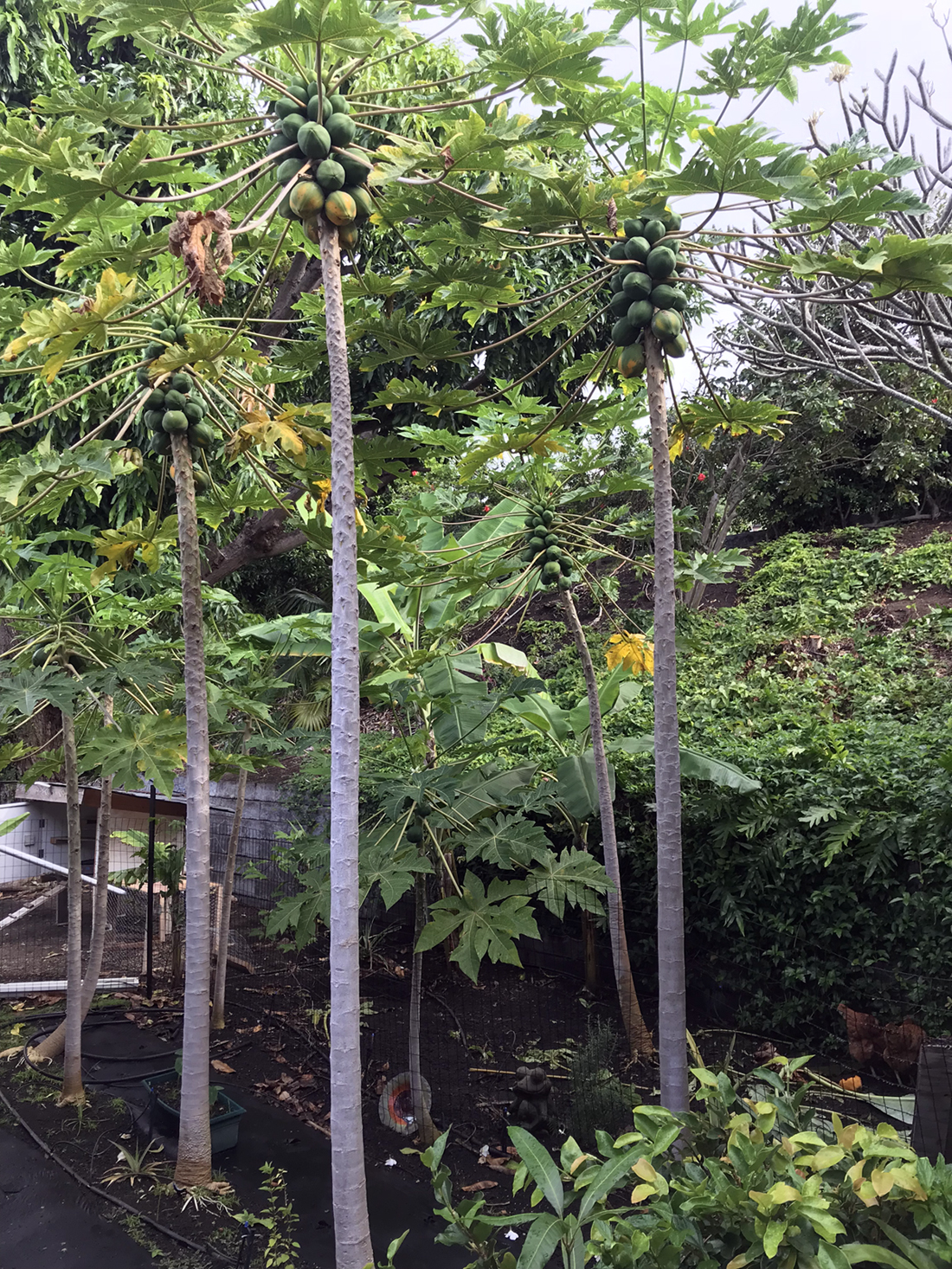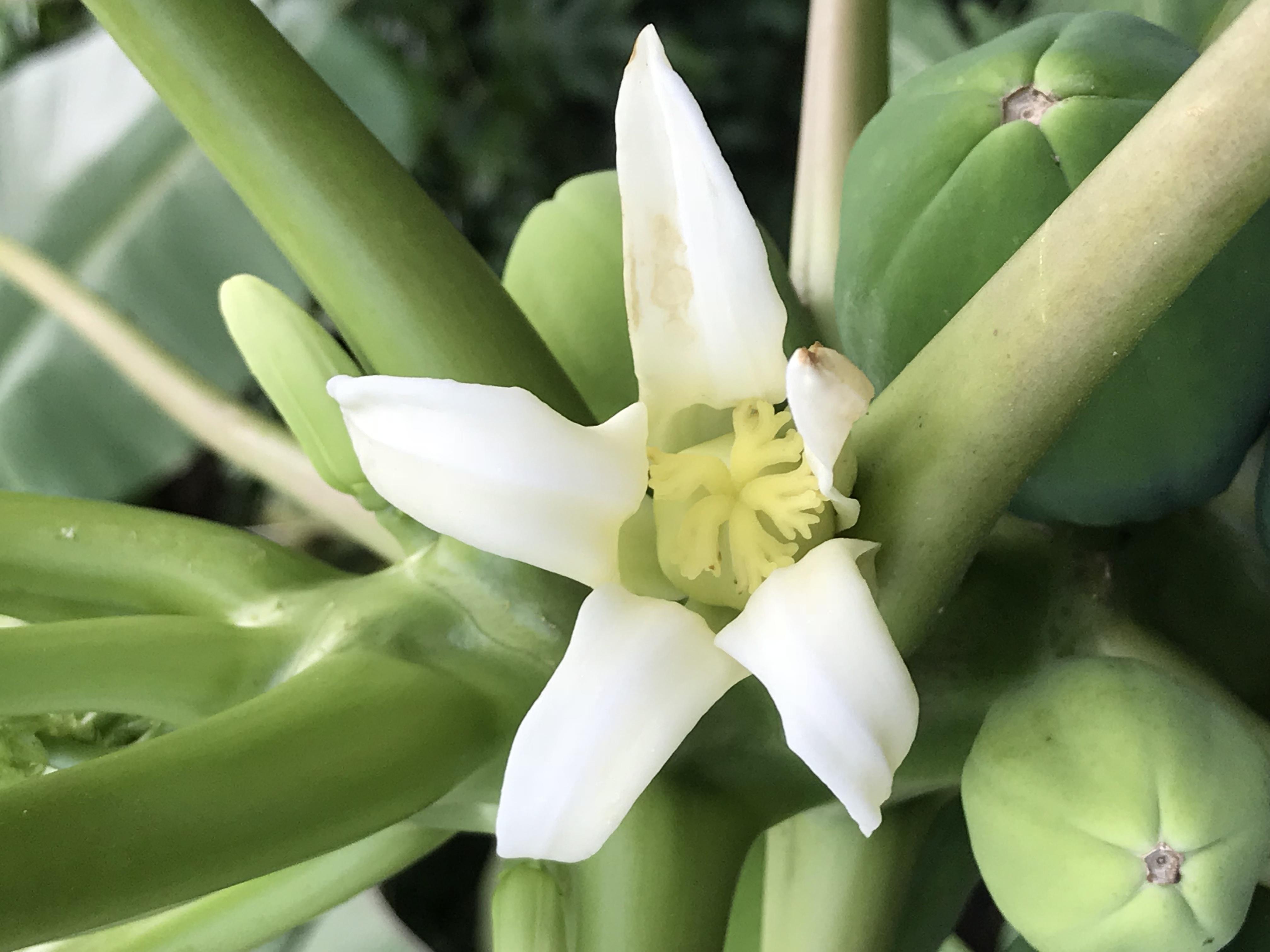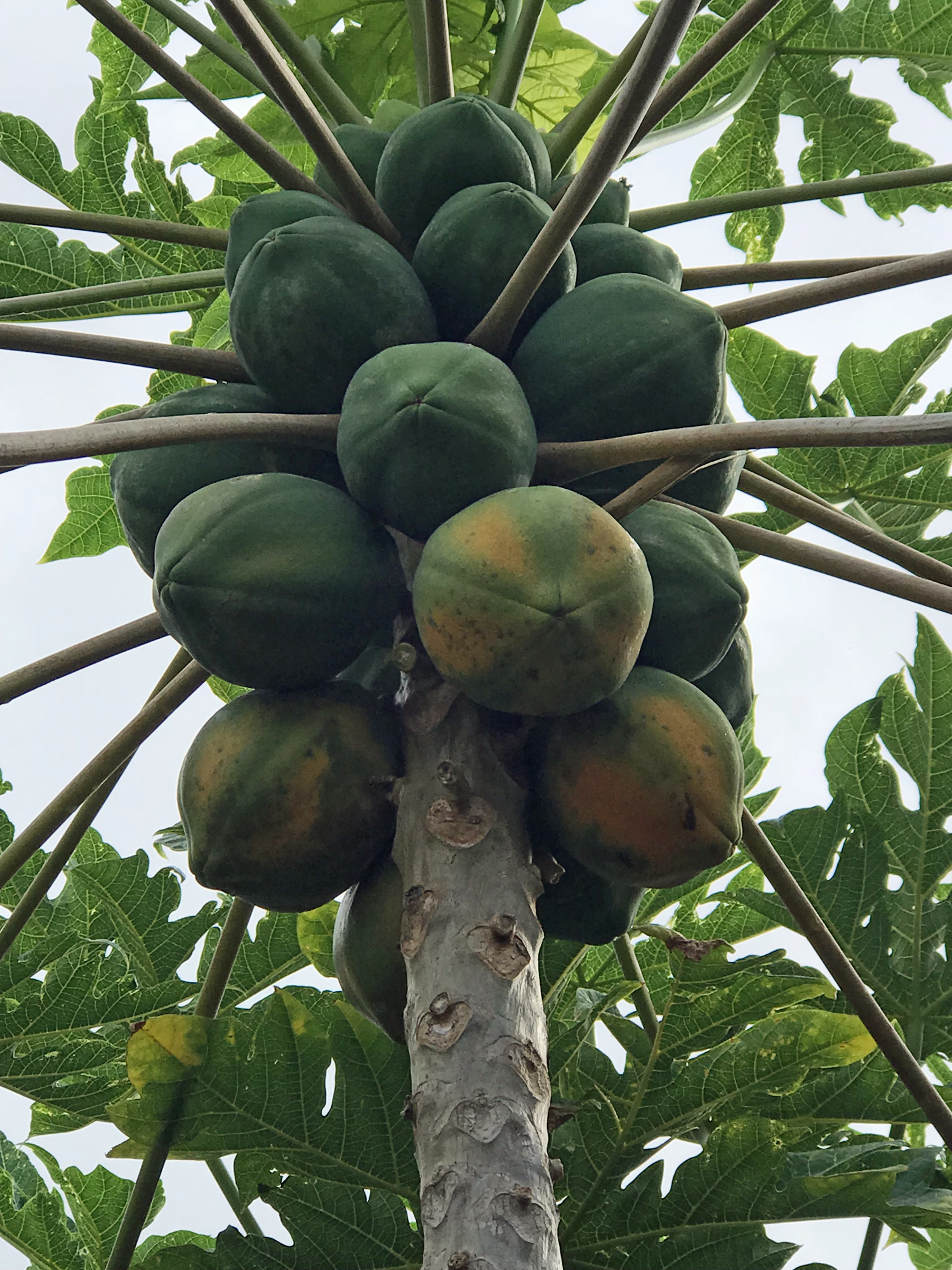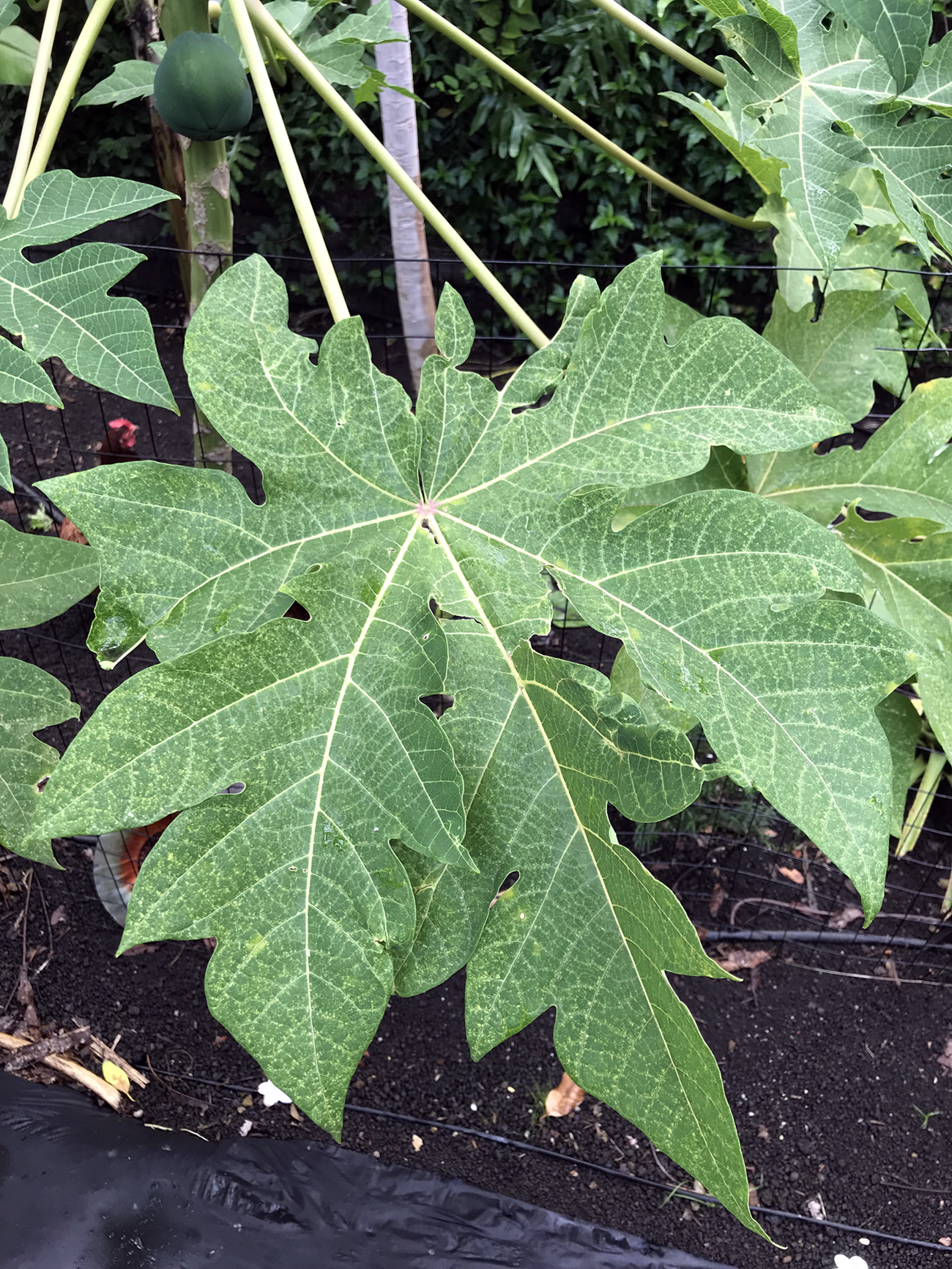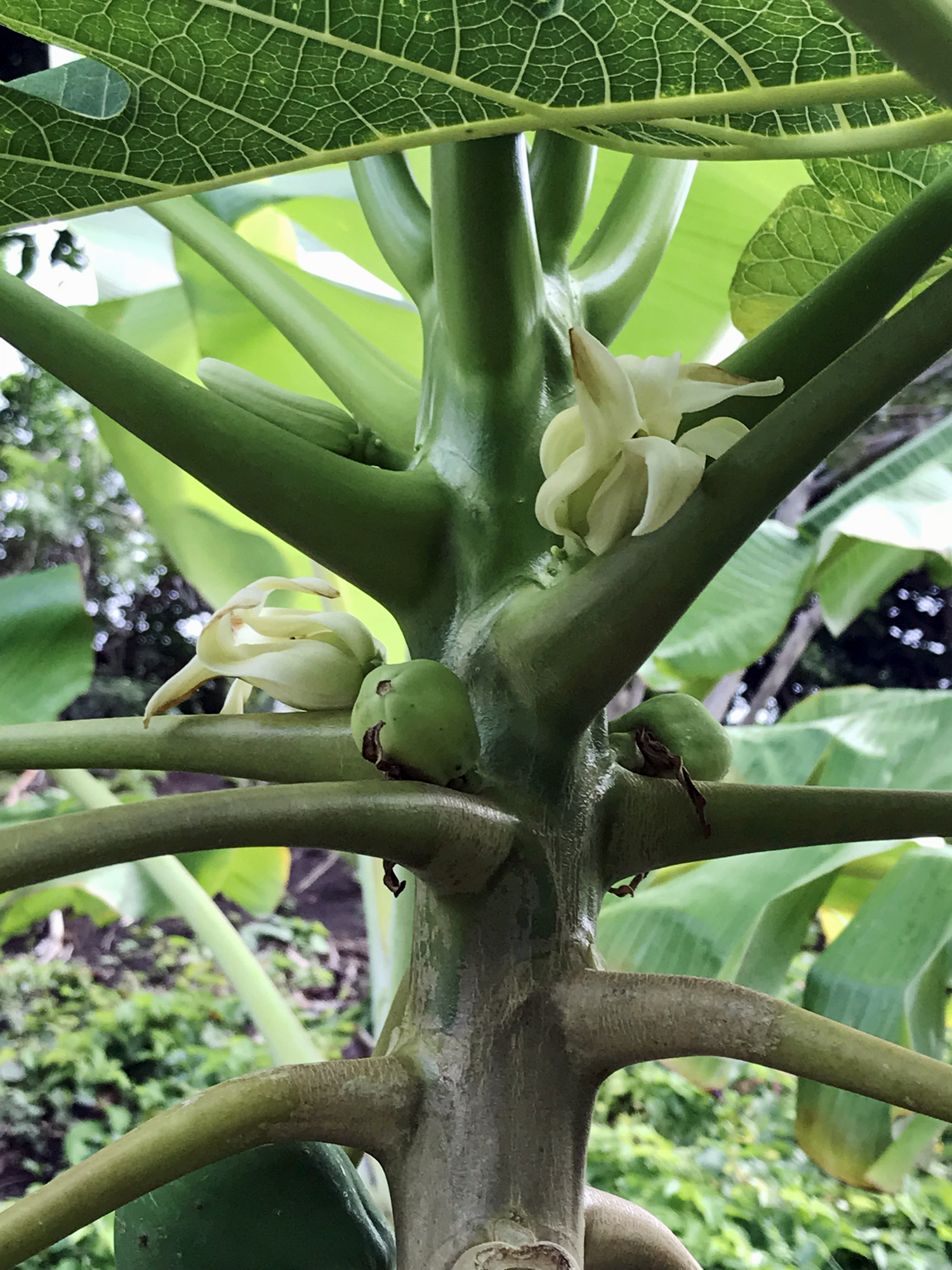
Description: This common tropical fruit crop, Carica papaya, is a soft-stemmed large shrub (non-woody plant) or small tree reaching heights of 2-5 m (5-25 ft.), with a gradually tapering trunk and light-colored bark which contains a caustic milky juice. It produces broad, smooth leaves up to 50 cm (2 ft.) across with deeply incised lobes that are clustered at the top of the plant. The flowers of this cultivated species are quite variable; in fact, C. papaya is a dioecious species, i.e., individual papaya plants produce either all female (fruit producing) flowers or all male (pollen-bearing) flowers. However, some male plants change to fruit-bearing female plants after being cut off at the top; and another type of papaya produces male and female sex organs on the same flower. In addition, a fourth variety produces all three types of flowers (i.e., those that have only female sex organs, others that have only male sex organs, and still others that have both male and female sex organs in same flower). The female flowers of C. papaya are five-petaled, creamy white and fragrant, and the edible fruits are large, grooved and yellow or yellow and green. The fruit pulp of papaya is sweet, tasty, and nutritious since it contains calcium, natural sugars, and vitamins A and C. It can be eaten raw, baked, stewed, cooked with other fruits in jam, or made into candy; and the juice can be extracted for a refreshing drink or sweet soup.
Distribution: Papaya is native to tropical America and probably arrived in Micronesia, at least on most of these islands, after European contact in the region in 19th century or earlier. It may have come from the Philippines, where it was introduced by the Spanish earlier. “Paw Paw” is one English name for this plant; “Papaya,” another English name is also part of its scientific name (Carica papaya). Papaya grows quickly from seed spread by humans or animals. It is cultivated extensively and is often eaten by people working in their farmlands. It is also often a weedy plant that does well in sunny places with relatively nutrient-rich soil.
Uses by Island or Island Group: Papaya is one of more commonly eaten tropical fruits in the world today. As noted above, it was introduced to Micronesian Islands after the first European and Asian contacts with these islands. Papaya fruit are best picked when they are half-ripe, still firm, and have a yellow-green color. The fruit is ripe when it is soft and easily bruised; and some varieties of ripe papaya will have a more pinkish or reddish than yellowish flesh. In various islands of Micronesia, this relatively recent introduced plant is widely cultivated and grows wild for use as food, medicine and adornment.
Uses in Palau: Papaya is known as Bobai or Chebingel in Palauan. Its fruits are eaten at different stages of ripeness. Ripe fruits are a common food for babies. Unripe papaya fruits are used to cook with some foods, such as shredded and fried tuna or canned fish, and are sometimes also eaten uncooked as a snack. Children use the hollow leaf-stems as toys to blow bubbles and make noise. These trees are planted near people’s homes, as well as found in gardens. According to Lessa (1977:167), in Palau the leaves and roots of Papaya “are pounded, placed in a bag, and soaked in water, and then drunk to treat tuberculosis.”
Uses on Sonsorol: Sonsorol as one of the Southwest Islands of Palau is one of the sixteen states of Palau where the inhabitants speak Sonsorolese, a local Trukic language as well as Palauan; Lessa (1977:167-168) reported on the medicinal uses of C. papaya on this small island in western Micronesia:
“In Sonsorol the leaves [of papaya] are heated and applied externally to the chest or side to relieve pain; the inner layer of the bark is scraped into shavings and heated, the fumes being sniffed to relieve pain; the bark is mixed with the flowers and dipped in boiled coconut oil to form a poultice applied to the heart area, underarm, bend in the elbow, and wrist, to induce sleep and relieve the pain caused by a puncture in the skin made by a fin or any sharp point in a fish, the mass being applied to the heart area, pelvis, knee, and ankle if the cut is on the foot (in neither kind of cut is it applied to the cut itself); juice from the fruit is dropped on a cut made by a sting ray to relieve pain.”
Uses in Yap: Papaya is known as Babay or Babae in Yapese. The fruit pulp of papaya is sweet, tasty, and nutritious containing calcium, natural sugars, and vitamins A and C. The roots of papaya are reportedly used in Yapese medicine: “The natives of Yap crush the root of this tree [sized herb], sniff the strong smell of it, and cure head-ache” (e.g., see Kawagoe 1917:69).
Uses in the outer islands of Yap State: Lessa (1977:167) reported on the uses of papaya on Ulithi, Ifaluk, and Fais: On Ulithi Atoll, where papaya plants are referred to as belonging to two “varieties” known as Bwebwae (papaya) and Bwebwae epsech (foreign papaya), its “fruits are eaten, alone or in soups especially when young and green,” and in addition, the “leaves are used as head ornaments or are fashioned in various ways by women to make ielsol, or love charms, that are worn either as neckpieces or headpieces.” On Ifaluk Atoll, “papayas form an important secondary food, being more commonly cooked than eaten as ripe fruit; the male flowers are used as garlands; and on the raised reef island of Fais, the fruits are eaten and flowers are used in leis or garlands.”
Uses on Guam: The papaya fruit crop was probably introduced early into Guam and other Mariana Islands by the Spanish colonizers. Safford (1905) referred to a number of ways in which C. papaya was used in Guam over a hundred years ago:
“The leaf-stems are hollow, and in Guam are often used as trumpets by the natives, some of whom are skillful in sounding military bugle calls upon them…. Those growing in Guam are small and inferior to the varieties cultivated in countries where they are used as a food staple.… In Guam it appears spontaneously in waste places. The natives give little attention to it. Though they eat it if other kinds of fruits be scarce, they do not appear to esteem it as an article of food” (Safford 1905:216).
Stone (1970:429) referred to the continuing spontaneous growth of C. papaya in Guam, where these plants “are quite common as naturalized plants in abandoned farm clearings.” In modern times, the ripe fruit of a hybrid type of papaya is consumed raw on Guam and the immature, green fruit are pickled or boiled and eaten as a vegetable: “The wild, naturalized variety has a small, edible fruit, but it is usually used for pig feed as the hybrid varieties are preferred” (Moore and McMakin 1979:137).
Uses in Chuuk on its outer islands: Lessa (1977:167) and others have provided information related to the use of C. papaya on Chuuk and on some of the many atolls within Chuuk State. On islands within the lagoon of the almost atoll of Chuuk, the papaya plant (known as Kipwpwaaw in Chuukese) “is planted rather extensively and is eaten mostly while working in the bush.” Leaf stems of papaya are sometimes used as straws on Chuuk. On Namoluk Atoll, the fruit is eaten, the flowers are used in garlands, and the leaves are scattered around “true taro” (Colocasia esculenta) plants as mulch; sometimes the hollow leaf stem is used as a straw. On Puluwat Atoll, the fruits and eaten, the flowers of the male plants are used in garlands, and some parts of the plant are used in medicinal preparations used to treat ringworm and tooth decay. On Namonweito Atoll, the root is used for headache relief, and the trunk is used for firewood.
Uses in Pohnpei: According to Christian (1899:339), C. papaya was brought into Pohnpei “about 1840 by an old French settler – the recluse of Nan-Moluchai referred to in the account of our visit to the Metalanim ruins.” Approximately a half century ago, C. papaya, known on Pohnpei as Memiap (or a variety of this name, e.g., Momiap, which appears to be derived from an English name “Mommy apple”) was said to be “never cultivated but grows wild everywhere” but is “well liked because it is plentiful and requires no work and its fruit is flavorful” and “the fruit is sometimes used as chicken feed and the leaves are eaten by pigs and cows” (Lessa 1977:167). In addition to eating the ripe fruits of papaya, there are a number of medicinal uses for this plant on Pohnpei:
“The leaf petioles are used by children as toys to make small peashooters…To treat bloody diarrhea…To treat stomach ulcers, the ripe fruits are eaten…to treat stomach worms…. Alternatively, to treat worms and parasites, a ripe fruit is cut in half and eaten, along with all the seeds inside, once daily for four days…. To treat headaches, a handful of flowers are pounded together with a rock, put in a cloth, and squeezed on the wound.… To treat a fungus infection…. To treat skin rashes…. To treat back pain, a root after being cleaned, is boiled in as much water as needed, then consumed daily.… To treat an asthma-type cough…. To treat kilinkutuwa (a fungal infection of the skin), the latex from the skin of the green fruit is placed on the affected area)” (Balick et al. 2009).
A common local remedy in Pohnpei for a jellyfish sting involves rubbing unripe papaya on the affected area. Unripe papaya has qualities that inactivate the jellyfish nematocysts and sooth pain. According to Lee et al. (2010:9), sap of the unripe papaya fruit is collected on Pohnpei and rubbed over the wounds of stonefish and scorpionfish stings to remove poison substances from the skin and to relieve distress and accelerate the healing process:
“This is prepared by slicing the top of the [papaya] fruit and draining the sap onto a brown leaf of uht [banana] (Musa x paradisiaa) that can either be placed directly on the wound as a poultice or the sap can be rubbed directly on the affected area.”
Papaya is also reportedly used to bring relief from a burning rash caused by coming in contact with fire coral (rarkapwudong); in this case, ripe fruits are cut into halves and applied to the rash to treat the pain and induce healing (Lee et al. 2010:9).
Uses on Pingelap and Mokil (Mwoakilloa) Atoll: Papaya is known as Keiniap on Pingelap where it was introduced after European contact. Although the papaya plant (C. papaya) appears to thrive “especially well on Pingelap and the fruit often reach the length of 18 inches or more,” the fruits are reportedly, more or less, “saved for presentation at feasts” (Damas 1994:56). On Mokil Atoll,papaya was reported as “the leading fruit tree but it is not a very important source of food” (Lessa 1977:167).
Uses in the Marshall Islands: The fruit pulp of papaya(known as Keinabbu in Marshallese), which is sweet, tasty, and nutritious containing calcium, natural sugars, and vitamins A and C, is consumed on the atolls and reef islands of the Marshall Islands. Sometimes the hollow leaf stems are used as smoking pipes in these islands.
Uses in Kiribati: The common papaya fruit crop is known in Kiribati as Te mwemweara, Te babaia or Te papaw. It is a relatively recent introduction to these atoll and reef islands of Kiribati. Catala (1957:87) briefly described cultivation and consumption of C. papaya in Kiribati during the middle of the 20th century:
“Papaya trees are rather abundant, but only in villages. With a few exceptions, such as those in missionary gardens, they receive no care. They may reach a height of 5 m or more, but produce few fruits. The Gilbertese [I-Kiribati], except children, do not seem to care much for papaya, although the better cultivated ones have an especially good flavor. When eaten green, the fruit are cooked in coconut milk.”
More recently, Tofiga (1985:162) referred to continued cultivation and consumption of papaya (“Pawpaw”) in Kiribati, where it is still grown as a house garden crop “near homes in composted holes,” and still serves mainly as a food for children, principally “eaten when fully ripe or may be cooked and made into jam.” Thaman (1993) referred to the common distribution of papaya plants around settlements in Kiribati; and he summarized their varied uses on these atolls, including the consumption of their nutritious fruits by older people as well as youngsters:
“Very common in villages, where they receive little care; when well-cared-for, produce fruits of very good flavor; hollow leaf stalks used by children as pea shooters and as siphons; juice from shoots applied to corneal ulcers and latex applied to sores and wounds; fruit one of the only readily available sources of vitamins A and C and commonly eaten, especially by children and the elderly; also cooked green in coconut cream; occasionally sold to passing ships for twist tobacco in the past.”
Uses on Banaba: Papaya had been introduced and utilized on Banaba before WW II when the Japanese military invaded this British controlled Micronesian Island. Phosphate (bird guano) deposits had been mined commercially on this raised reef island for decades by hired I-Kiribati men under contract by the colonial administrators. Papaya fruits provided food on Banaba, and their seeds were said to have been used to make a “valuable medicine” known as “papacire”(see Shennan et al. 2005:194).
Local people have recalled how the Japanese military authorities limited the food source of papaya plants to their own military people, and how the I-Kiribati adapted:
“Then the Japanese came. Suddenly, everything changed dramatically. The Japanese disrupted the peaceful existence on the island. They confiscated all the food items so there was soon a terrible shortage of food. The islanders started scavenging for anything edible, and the Japanese did not let them eat papaya, breadfruit, pumpkin, coconut or fish. All these were kept for members of His Majesty the Emperor’s troops. The starving islanders stole unripe papaya and then, when they ran out of these, took to scraping the inside of papaya trunks and eating the moist mess inside” (Shennan et al. 2005:75).
Phosphate deposits were exported profitably from Banaba from the turn of the 20th century until this valuable mineral resource was more or less exhausted in 1979. Today most the of people living on Banaba (about 500) are involved in subsistence activities including fishing and farming of food crops like bananas, breadfruit, and papaya (e.g., see Sigrah and King 2001; Thaman and Samuelu 2016).
Uses on Nauru: Papaya is a Pre-World War I introduction on Nauru where it is cultivated in gardens for its ripe fruit which is eaten and made into jam, mostly by the resident European community. Its fruit can serve as a laxative and the juice and flesh from green fruit that contains the papain enzyme can be used to tenderize pork and beef; and the white sap exuded from small immature fruit is used “as a cure for ringworm.” In addition, its fragrant flowers are used in garlands, and its hollow leaf petioles are used by children as “pea shooters” using the fruit of Irin (Tournafortia argenta) on this island (see Thaman et al. 1994:113). This is Flora Guam
PAPAYA. PAWPAW.
A softwooded, un- or few-branched rather palm-like tree with copious, thick, sticky, irritating milky sap; leaves very large, palmately divided into about 7 to 11 lobes, these in turn irregularly pinnatifid and toothed; petioles longer than blade, often over I m long; trees usually male or female, or some bisexual but with separate male and female flowers; male flowers about 2 cm wide, white, numerous on long (30-90 cm) panicles; female flowers about 4-6 cm wide, white, subsessile, solitary of few together in leaf axils; fruit variously shaped, from subglobose and only 3-5 cm long in wild types, to cylindric and I m long, green turning yellow, orange, or red ; flesh orange to red ; seeds many, around the edges of the central cavity, small (3-4 mm thick), black, wrinkled, enclosed in a firm gelatinous membrane.
A tropical American plant, really a sort of huge herb rather than a tree; seldom over 10 m tall (though one tree-seen near Kona, Hawaii, a few years ago-was at least 15 m tall, was about 12-branched, and had a trunk over 1 m thick.) In Guam papayas are quite common as naturalized plants in abandoned farm clear ings. Generally they have small fruits, less than 5 cm long in some cases, which have an insipid or even bitter taste and are quite worthless for fruits. The finest quality cultivars are rather scarce in Guam.
Harmon (3892).
The sap contains a meat-digesting enzyme, the principal ingredient (papain) in commercial meat-tenderizers.
The fruit are sought by fanihi (fruit-bats), pigeons, and perhaps other birds.